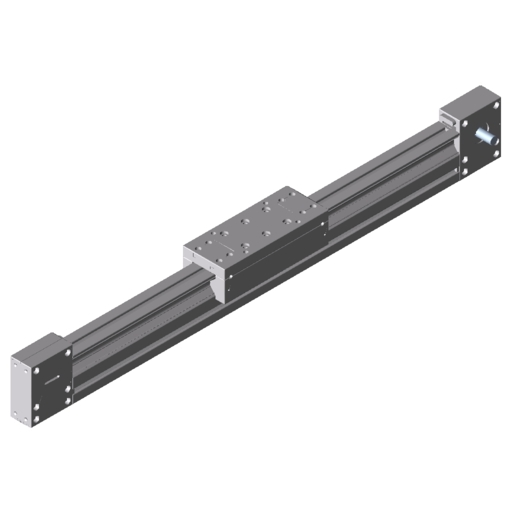
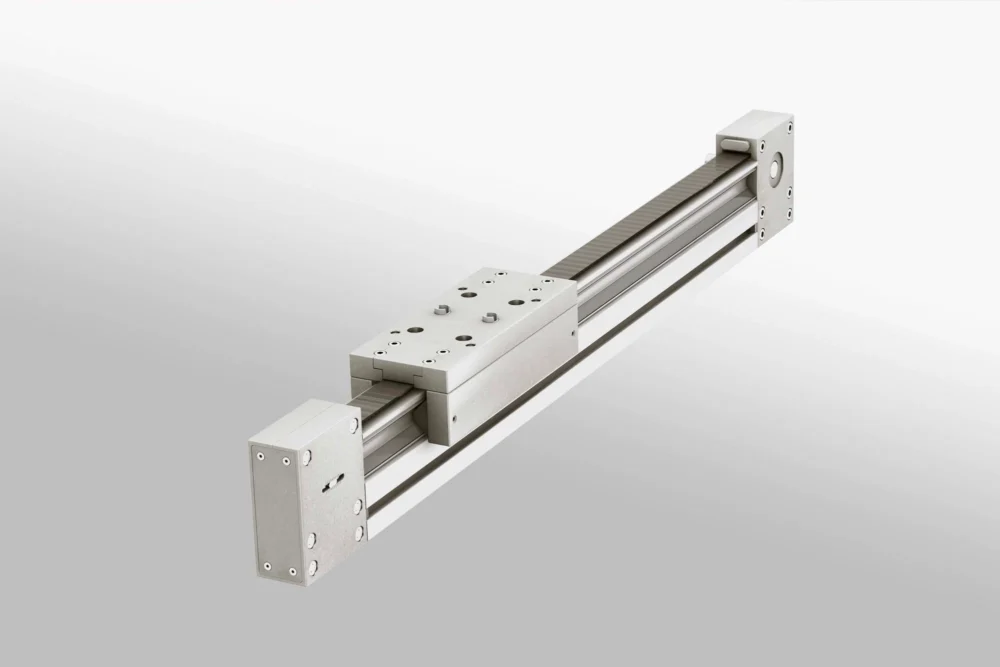
Linear Unit KRF 8 80×40 ZR, synchronous drive

Produktnr: 0.0.648.69 Kategorier: , Stikkord:
Set CAD-format
Linear Unit KRF 8 80×40 ZR, synchronous driveCADPDFRFQ

Preview

Properties

line 8line 8
ESD-safeNo
Cross-sectional areaA = 15.58 cm2
Moment of Inertia, torsionalIt = 18.31 cm4
Moment of Inertia, x-axisIx = 95.62 cm4
Moment of Inertia, y-axisIy = 22.3 cm4
Total massm = m1 + H * m2
Maximum operating loadFx max = 1000 N
Maximum force in direction yFy max = 2500 N
Maximum force in direction zFz max = 2500 N
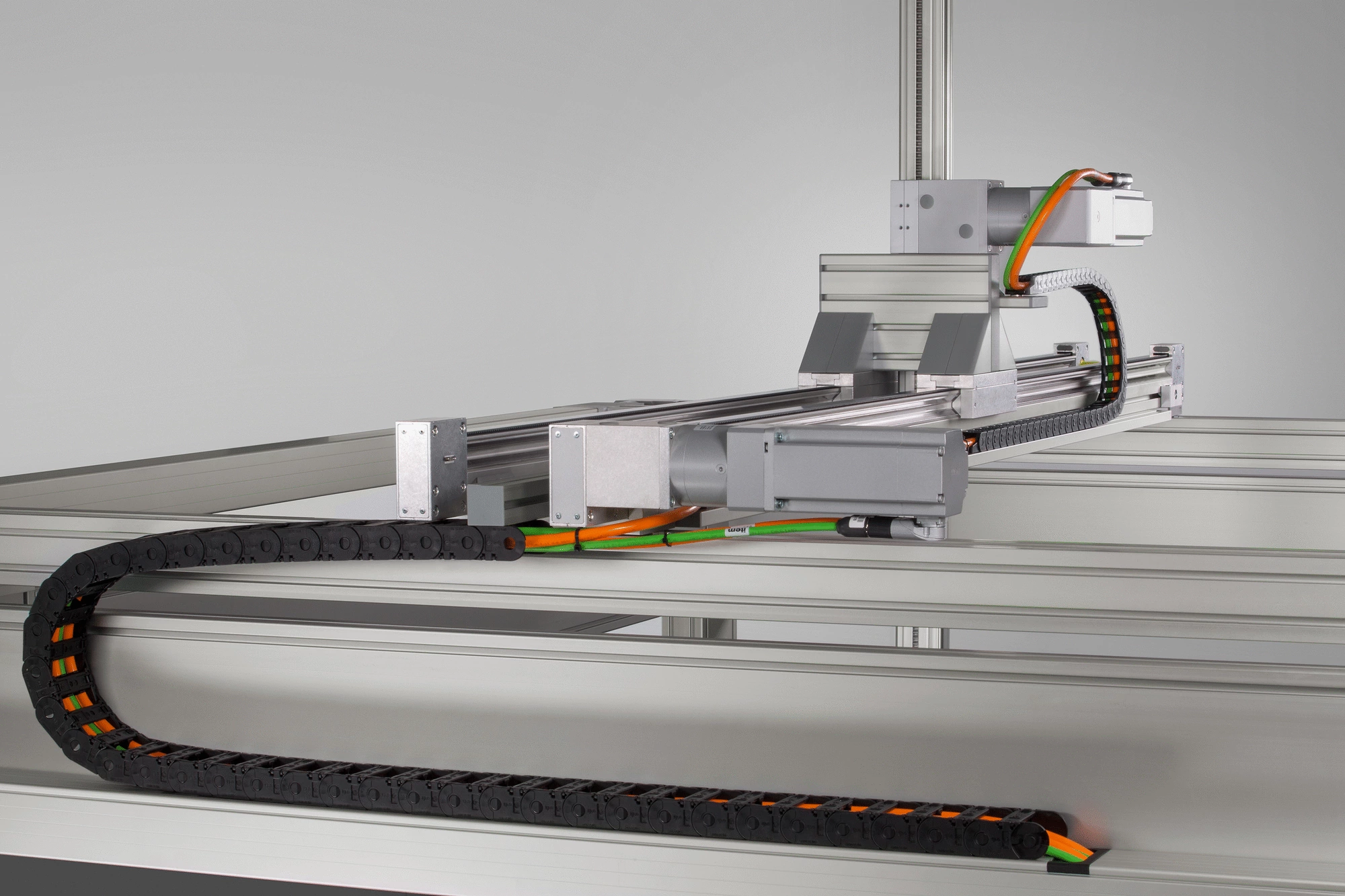
Thanks to its criss-crossed roller guide and high-strength steel tracks, Linear Unit KRF is ideal for demanding applications. Two Linear Units KRF can work in parallel via a synchronous drive, with Linear Unit KRF 8 80x40 ZR, synchronous drive responsible for guidance. As the shaft on the drive side passes straight through, a synchroniser shaft can be connected to it. Synchronising Set KRF 8 80 ZR (0.0.648.58) is used to make this connection.
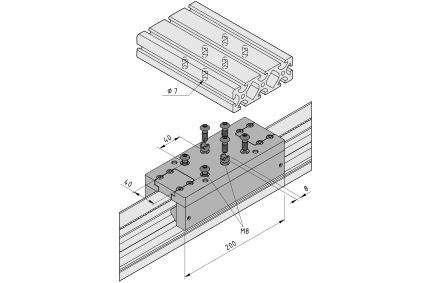
Complete Linear Units with variable stroke length (H), Drive Unit and Reverse Unit, support profile with integrated Roller Guide on guide tracks, preset free of play. Timing-belt tensioning device integrated into Reverse Unit, ball-bearing-mounted pulleys. Guide slide with eight-piece roller-bearing mounting, oil-lubricated roller contact (re-lubrication every 6 months or every 2500 km) Acceleration: max. 10 m/s² Stroke velocity: max. 10 m/s Linear Unit KRF boasts exceptional precision and low-vibration linear movement. Repeat accuracy is ± 0.1 mm. The mass of a Linear Unit KRF can be determined from the stroke length (without payload): m = m 1 + H x m 2
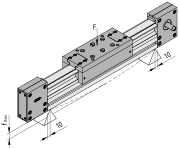
Profile deflection The maximum deflection, f max of the system is governed by the dimension of the profile cross-section, the free profile length and the force applied. It should not exceed 1mm/m. The KRF profile must be given appropriate support if the linearity of movement has to be very precise.
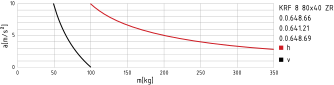
h = horizontal orientation v = vertical orientation Maximum possible acceleration in relation to moved mass and installation orientation
Travel speed v in relation to input speed n (timing-belt drive)
Operational force Fx dependent on input torque M (timing-belt drives Fx > 500N)